Position Realty · Buyer
What Should You Investigate Before Buying a Home?
A home can look wonderful and still have problems you cannot see during a showing. This explains what to investigate, who can help, and what a general home inspection may not cover.
What is a buyer’s investigation advisory?
It is a reminder that you are buying more than the rooms you can see. You are also buying the structure, systems, land, legal rights, operating costs, surroundings, and limitations that come with the property.
The seller, agents, public records, and advertising may give you useful information, but none of those sources replaces your own investigation of the facts that matter to you. Your agent can help you identify questions and obtain information, but your agent is not a contractor, engineer, surveyor, insurance professional, environmental specialist, or government agency.
What does a general home inspection actually do?
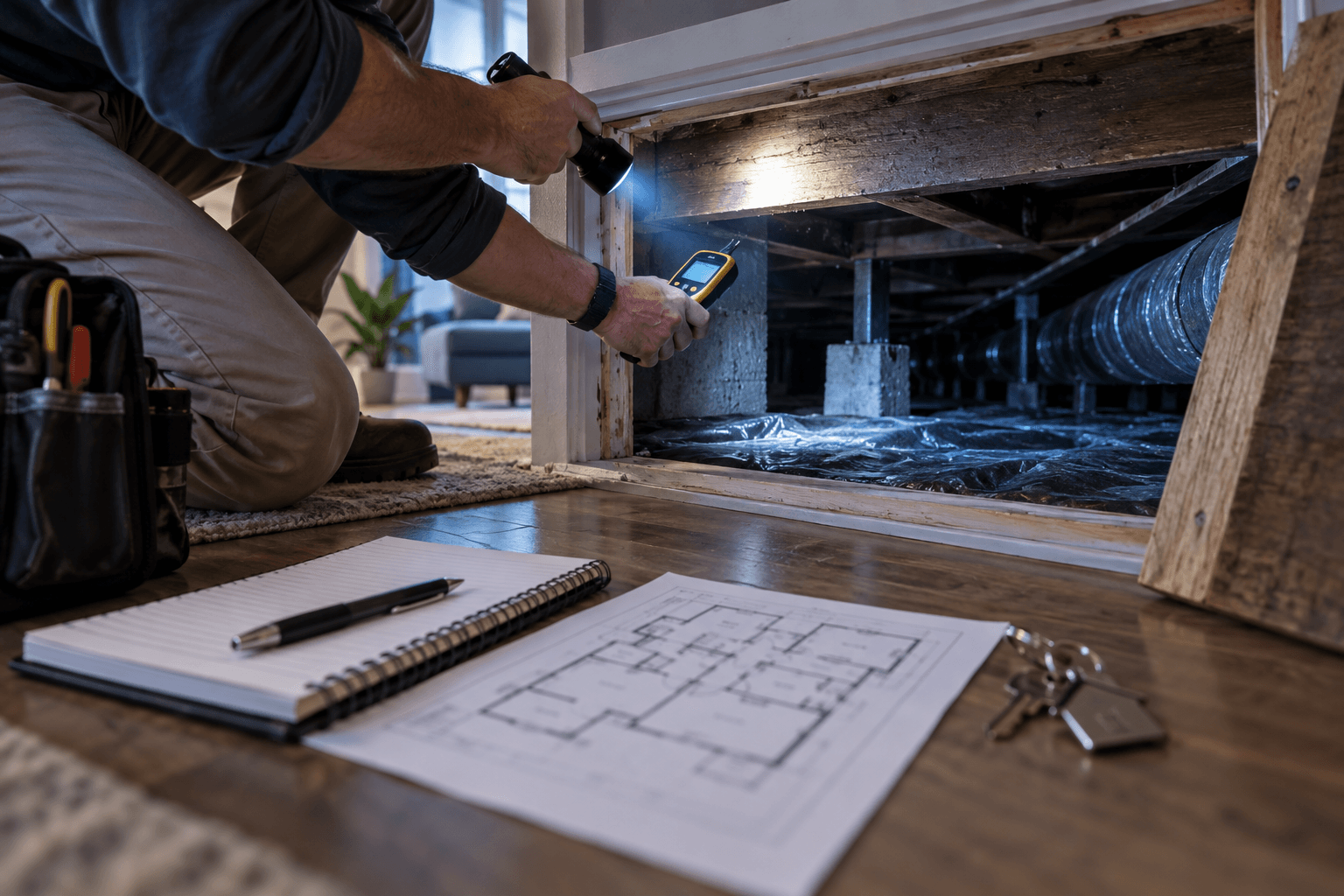
A home inspector looks at accessible parts of the home and reports visible conditions within the inspector’s stated scope. That inspection can reveal important problems and point you toward specialists, but it is not a warranty and it does not examine everything.
An inspector may not enter inaccessible areas, open walls, determine legal boundaries, approve permits, insure the property, test every environmental condition, or evaluate every specialized system. When the inspector recommends another expert, that recommendation is part of the investigation—not a problem to ignore because the first inspection is finished.
Start with the home and its major systems
- Foundation, framing, roof, exterior, drainage, plumbing, electrical, heating, cooling, ventilation, appliances, pools, safety features, and energy performance.
- Wood-destroying pests and organisms, including inaccessible areas when further inspection is recommended.
- Soil, fill, settlement, slope movement, grading, retaining walls, and drainage when conditions call for specialized review.
- Water quality and supply, wells, sewer or septic systems, utilities, solar equipment, generators, and other property-specific systems.
Then ask whether the property is legally and physically what you think it is
- Verify square footage, room dimensions, lot size, age, and any measurement important to value or intended use. Published numbers may be estimates drawn from different sources.
- Fences, hedges, walls, and driveways do not necessarily establish legal boundaries. Review surveys, easements, access rights, encroachments, and the preliminary title material when relevant.
- Confirm permits, final approvals, zoning, occupancy, additions, conversions, rental restrictions, and whether your planned use is allowed by the responsible agencies and governing documents.
Could a hazard or insurance problem change your decision?
- Investigate lead, asbestos, mold, radon, methane, storage tanks, contaminated soil or water, hazardous waste, flood, fire, earthquake, and any condition suggested by the property or reports.
- Obtain property-specific insurance information early. Location, claims, roof, wiring, plumbing, foundation, vegetation, and other conditions may change availability, coverage, deductibles, and price.
You are also choosing the surroundings
- Consider HOA finances and rules, common areas, rental limits, schools, public services, internet and utilities, traffic, airport or road noise, odors, agriculture, animals, nearby businesses, planned development, and construction.
- Investigate the facts that matter to your household, accessibility, work, transportation, culture, religion, health, safety, privacy, and intended use. Your agent cannot know every personal requirement unless you identify it.
Here is what following up can look like
Suppose the general inspector notices staining below a window but cannot tell whether the leak is active or what is behind the wall. The investigation is not complete merely because the report mentions it. You might ask for repair records, obtain a roof or moisture specialist, learn what further testing requires, and then decide whether the remaining uncertainty is acceptable to you.
The same idea applies to an addition without clear permits, a fence that may not follow the property line, an older electrical panel, a septic system, insurance availability, or anything else that could affect your use, cost, safety, or willingness to buy.
Your purchase agreement controls your investigation rights
The agreement states your access, deadlines, notices, and any right to approve the property, request action, cancel, or remove a contingency. This advisory does not create or extend those rights.
If a report raises a question, decide what you still need to learn while your contractual rights remain available. Removing a contingency means accepting the risk described by the agreement even when some facts remain unknown.
Ask yourself what would matter after you own it
- What repair, safety, insurance, boundary, permit, or use problem would make me reconsider this purchase?
- Which parts of the property have not actually been inspected or verified?
- Did any report recommend another specialist or additional testing?
- What do I need to know about the HOA, neighborhood, services, noise, traffic, agriculture, development, or other surroundings?
- Which investigation deadlines and decision rights are written into my purchase agreement?